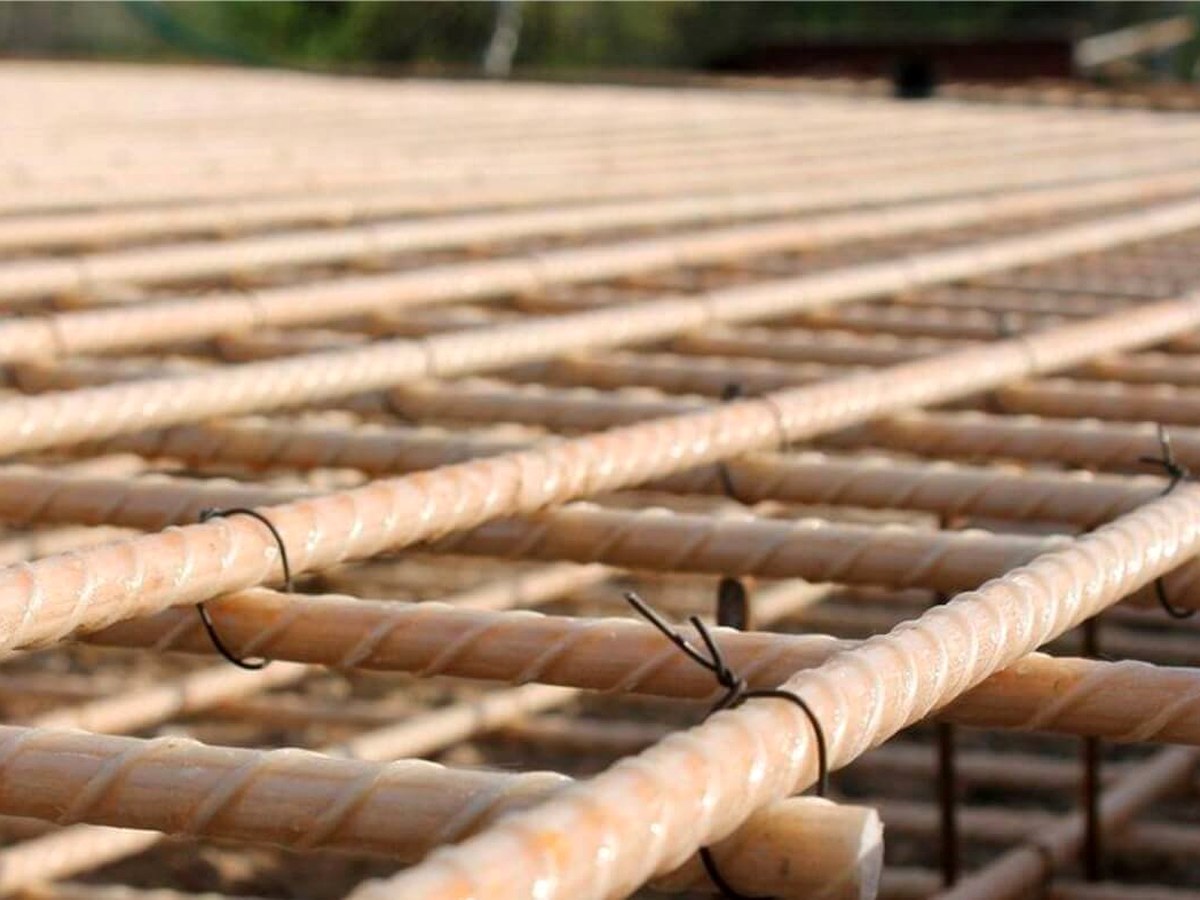
Description
Crimar Composites GFRP (glass fiber-reinforced polymer) rebar is a corrosion-proof reinforcement for concrete. It never rusts, weighs about one-quarter of steel, offers roughly twice the tensile strength of steel, and is non-conductive and non-magnetic — ideal wherever steel rebar corrodes and fails.
Why FRP Rebar
- Corrosion-proof: immune to chlorides, acids, and alkalis — no rust, no concrete spalling.
- Lightweight: about 1/4 the weight of steel, lowering shipping and handling costs.
- High strength: roughly twice the tensile strength of steel rebar.
- Non-conductive & non-magnetic: ideal for MRI suites, substations, and sensitive facilities.
- Long service life: decades of maintenance-free performance.
Typical Applications
- Bridge decks and barriers
- Seawalls and marine structures
- Water and wastewater treatment plants
- Tunnels and foundations
- Roads and precast elements
Specifications
| Property | Typical value (representative) |
|---|---|
| Material | E-CR glass fiber with vinyl-ester / epoxy resin (GFRP) |
| Standards | ACI 440.1R, ASTM D7957, CSA S807 |
| Available sizes | #2 – #10 (≈ 6 mm – 32 mm nominal diameter) |
| Guaranteed tensile strength | ≈ 550 – 900 MPa (80 – 130 ksi); lower for larger diameters |
| Tensile modulus | ≈ 45 – 60 GPa (6.5 – 8.7 Msi) |
| Behavior | Linear-elastic to failure (does not yield) |
| Density | ≈ 1.9 – 2.1 g/cm³ (about 1/4 the weight of steel) |
| Surface finish | Sand-coated and/or helically wrapped (ribbed) for bond |
| Corrosion resistance | Immune to chloride, acid, and alkali corrosion |
| Electrical / magnetic | Non-conductive, non-magnetic, RF-transparent |
| Bent-bar strength | ≈ 50 – 60% of straight-bar tensile strength |
Specifications are representative typical values for GFRP rebar; please confirm against the product datasheet for your project.