Glass-fiber reinforcing bar for concrete in marine, chemical, and electrically sensitive structures — non-corrosive, non-conductive, ~1/4 the weight of steel. Made in the USA.
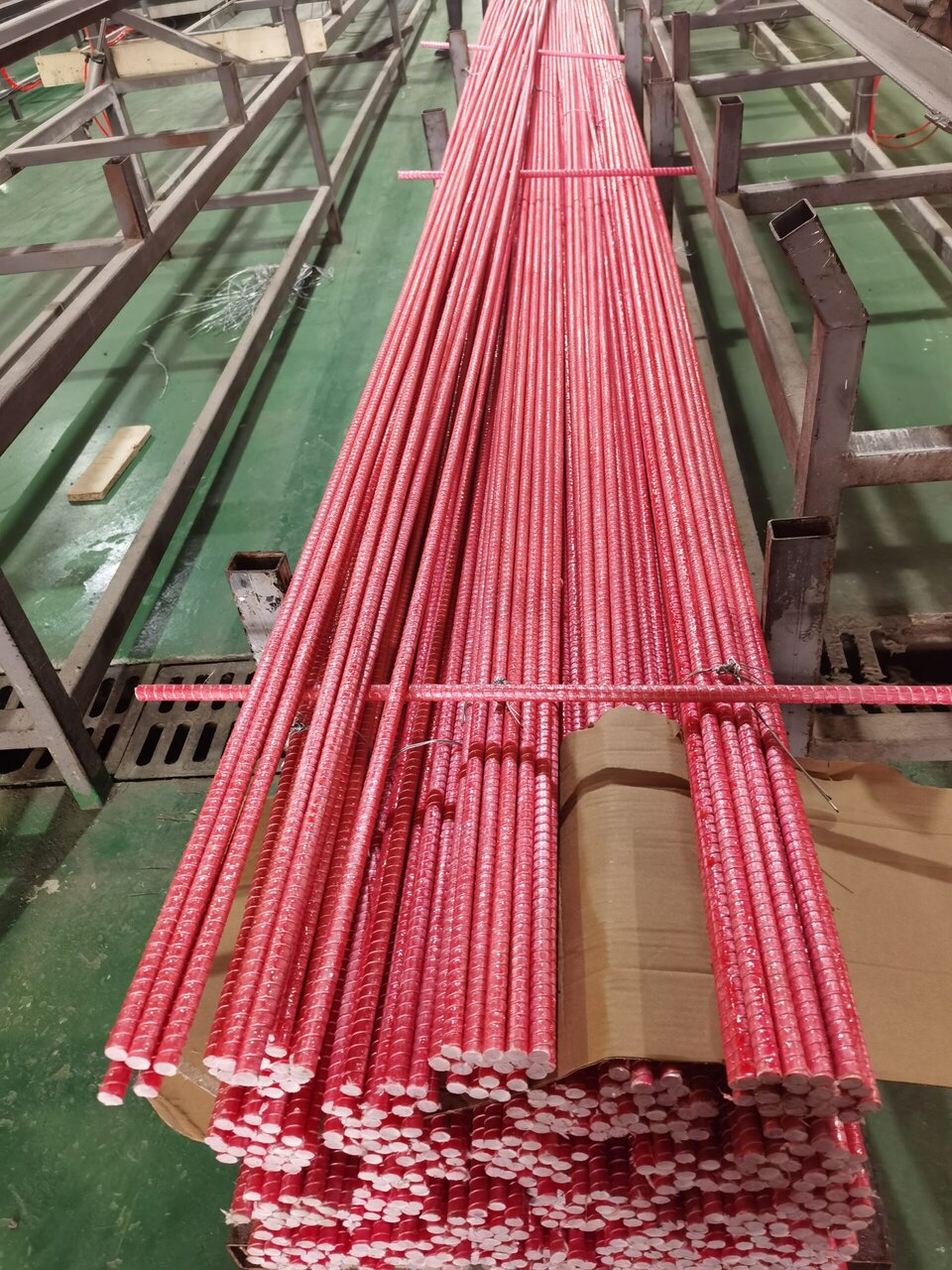
The problem with steel rebar
- Corrodes inside concrete — causing cracking, spalling, and expensive structural repair.
- Conductive and magnetic — a problem near MRI suites, transformer pads, and rail signaling.
- Heavy and prone to the rust cycle in marine and chemical exposure.
The Crimar FRP solution
- Non-corrosive — will not rust or spall; dramatically longer structure life.
- Non-conductive & non-magnetic — ideal for MRI, transformer, and rail applications.
- ~1/4 the weight of steel — easier handling and placement.
- High tensile strength — engineered to ASTM D7957 / ACI 440.
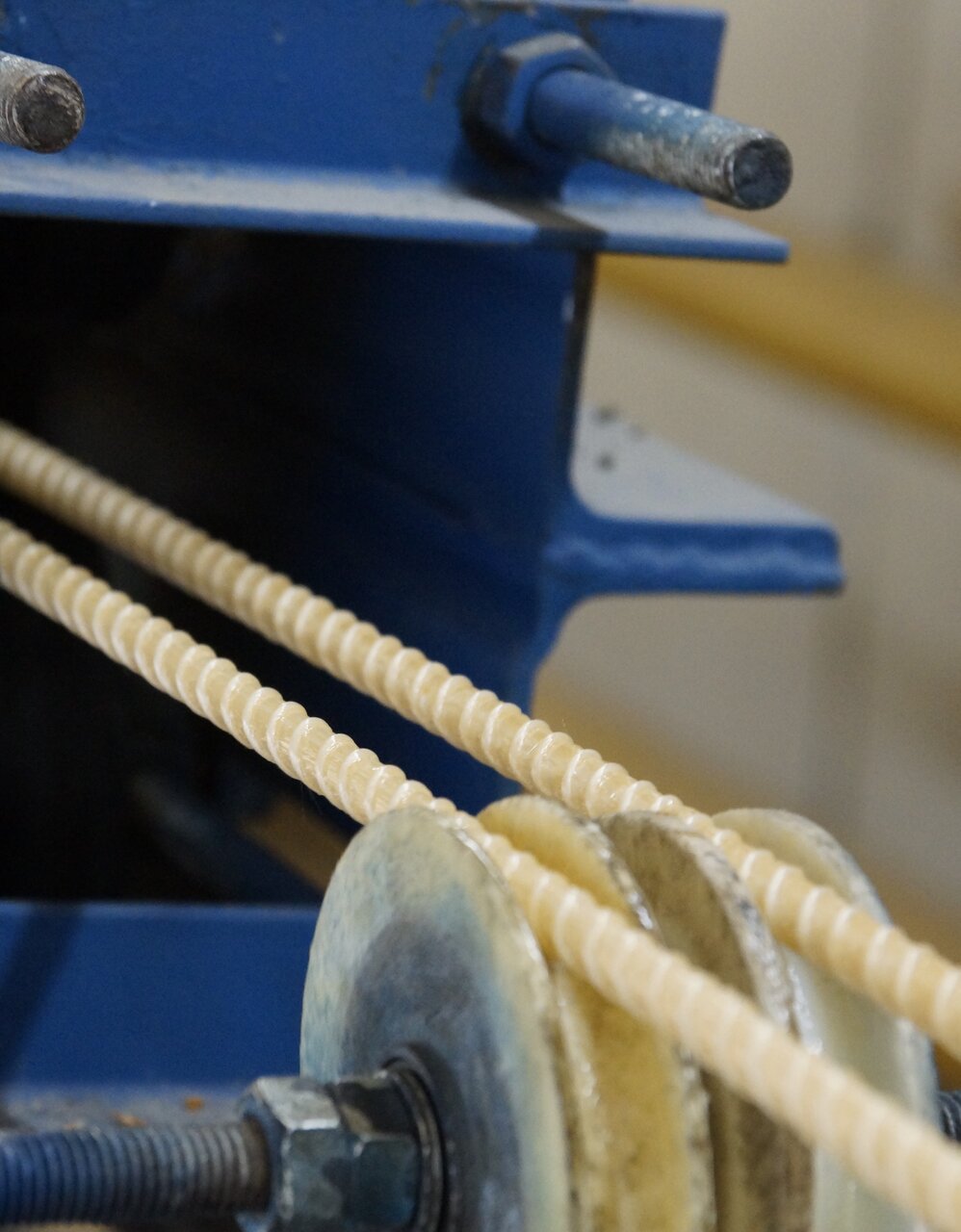
- Sand-coated for strong concrete bond.
What we supply
- Straight and bent GFRP rebar, common sizes #2–#10 (6–32 mm)
- Sand-coated surface for bond; cut and bent to your schedule
- For seawalls, water/wastewater, tunnels, MRI & transformer foundations, and more
Lower total cost of ownership
| Over 25 years (illustrative) | Steel / metal | Crimar FRP |
|---|---|---|
| Corrosion repair / spalling | Recurring | None |
| Service life in corrosive concrete | Reduced | Greatly extended |
| Conductivity / magnetism | Conductive / magnetic | Neither |
| Lifetime cost | Higher | Lower |
One avoided corrosion failure, shock incident, or unplanned outage can outweigh the entire material premium. You are not just buying a product — you are eliminating a failure mode.
Why Crimar Composites
Crimar Composites is the pultrusion arm of the Crimar group, serving industrial clients since 1988. We back our FRP with US-based engineering and customer support and manufacturing in Los Angeles, USA — so we can take you from standard stock to custom fabrication, and help you spec the right resin and section for your environment.
Get a fast quote
Send us your application — environment, sizes/loads, and quantities — and our US-based team will help you spec the right FRP and send a quote.
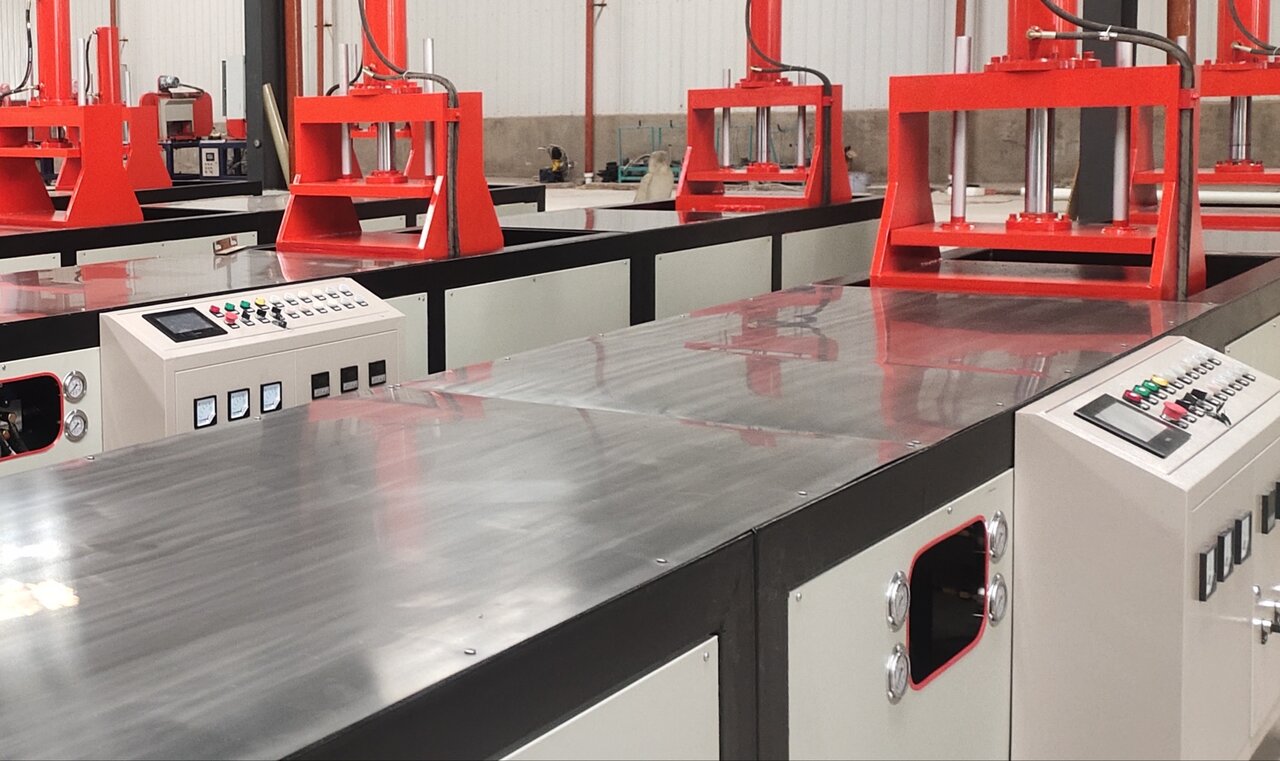
GFRP rebar in production
Frequently Asked Questions
Is GFRP rebar as strong as steel?
GFRP has higher tensile strength than steel by weight, though a lower modulus — so it is designed per ASTM D7957 / ACI 440 for the application. We can support your design.
What sizes are available?
Common bar sizes #2 through #10 (approx. 6–32 mm), straight or bent to your schedule, sand-coated for bond.
Where is GFRP rebar used?
Marine and coastal structures, water/wastewater, tunnels and bridge decks, MRI and transformer foundations, and any concrete where steel corrosion or conductivity is a problem.
What standards does it meet?
It is produced to ASTM D7957 and designed per ACI 440 guidance. Request a datasheet for certified properties.
TCO figures are illustrative and depend on your site and duty. Product values are representative — request a datasheet for certified data. Made in USA.