Substations and utility sites combine two problems that are hard on conventional materials: energized equipment and relentless outdoor exposure. Steel and aluminum are conductive and they corrode — which is exactly why utilities increasingly specify non-conductive, corrosion-proof fiberglass (FRP) for the structures crews stand on and hold.
Conductive metal is a safety liability around live equipment
Metal platforms, ladders, railing, and conduit can carry current. Around energized gear, one contact with an unexpectedly live surface can be fatal, and conductive structures are a constant arc-flash and step-and-touch-potential concern for the safety program. FRP is non-conductive and RF-transparent, removing that path and reducing exposure for crews working near live equipment.
The outdoor environment destroys steel
Substations sit outdoors for decades; coastal humidity, washdown, and battery rooms (with corrosive H2S) attack galvanized steel. Once the coating is breached, the rust-and-replacement cycle begins. FRP is immune to chlorides, acids, alkalis, and H2S, so it serves for decades with no painting or re-galvanizing.
What utilities use FRP for
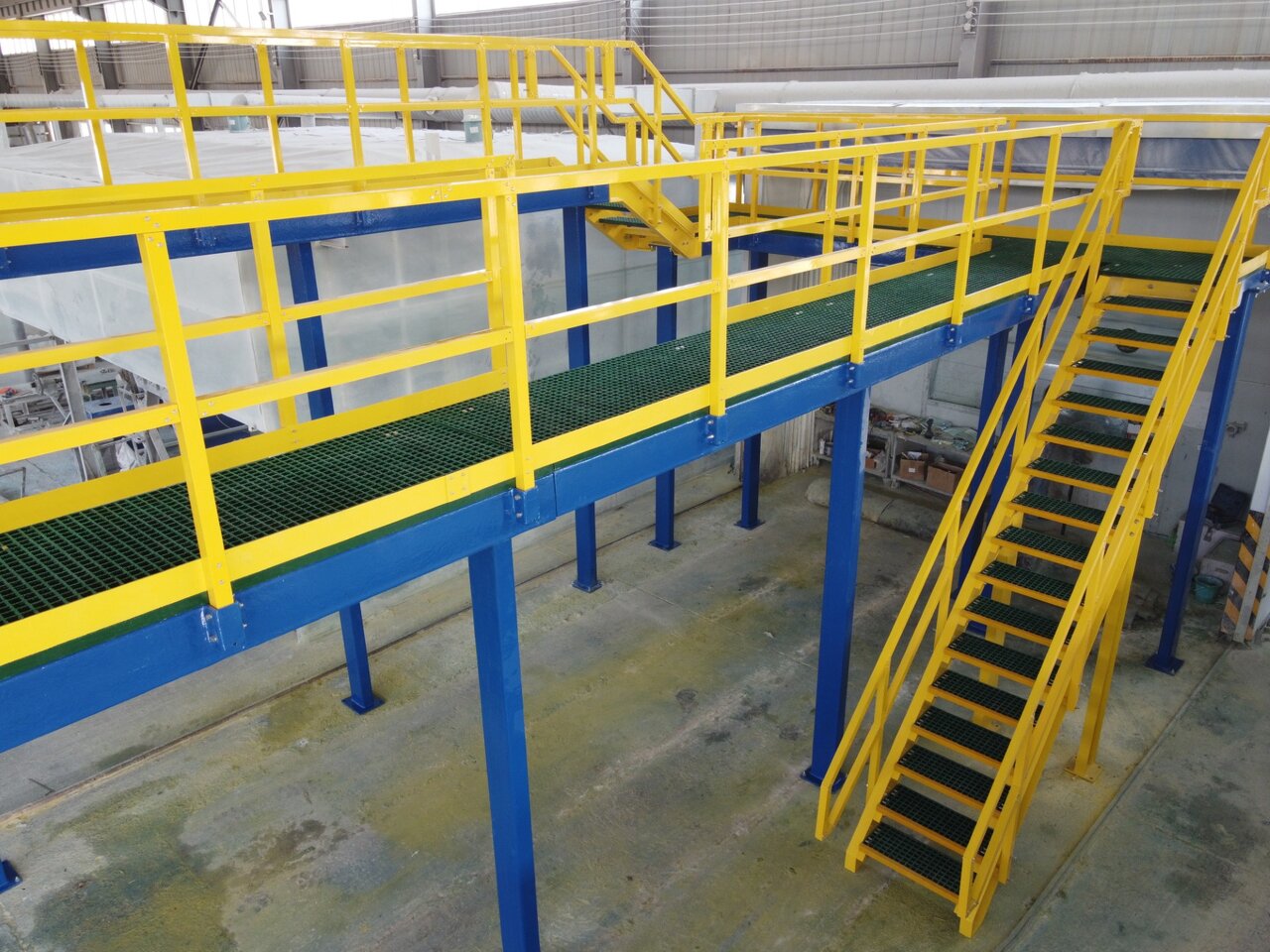
- Equipment platforms, walkways, and trench / cable-trench covers
- Non-conductive handrail, guardrail, ladders, and safety cages
- Cable conduit, duct, and tray protection
- Structural supports for equipment and cable tray
All of it is lightweight — about a quarter of the weight of steel — so installs and swaps are faster, often without a crane, which shortens outage windows.
Safety-code friendly
FRP railing and walking-working surfaces are engineered to meet OSHA 1910.29 height and load requirements, while the non-conductive property supports electrical safety programs. See our full electrical & utility applications.
Designing or retrofitting a substation?
Send us your environment, spans/loads, and the components you need and our US-based team will help you specify non-conductive FRP and provide a quote.