Buyers often compare fiberglass (FRP) and steel on the purchase order, where steel usually wins. But industrial assets are not bought once — they are coated, repaired, replaced, and worked around for decades. On the metric that actually matters, 25-year total cost of ownership (TCO), corrosion-prone steel is frequently the more expensive choice.
The real cost of steel is everything after the invoice
In a corrosive or energized environment, the lifetime cost of steel is driven by what happens after installation:
- Coating & re-galvanizing — recurring every few years to hold back corrosion.
- Replacement — corroded grating, railing, and supports get cut out and replaced, often two to three times over 25 years.
- Downtime & labor — each replacement means cranes, crews, permits, and on a 24/7 facility, an outage.
- Safety exposure — conductive metal near energized equipment, plus slip and trip hazards as coatings fail.
FRP’s cost profile is the opposite
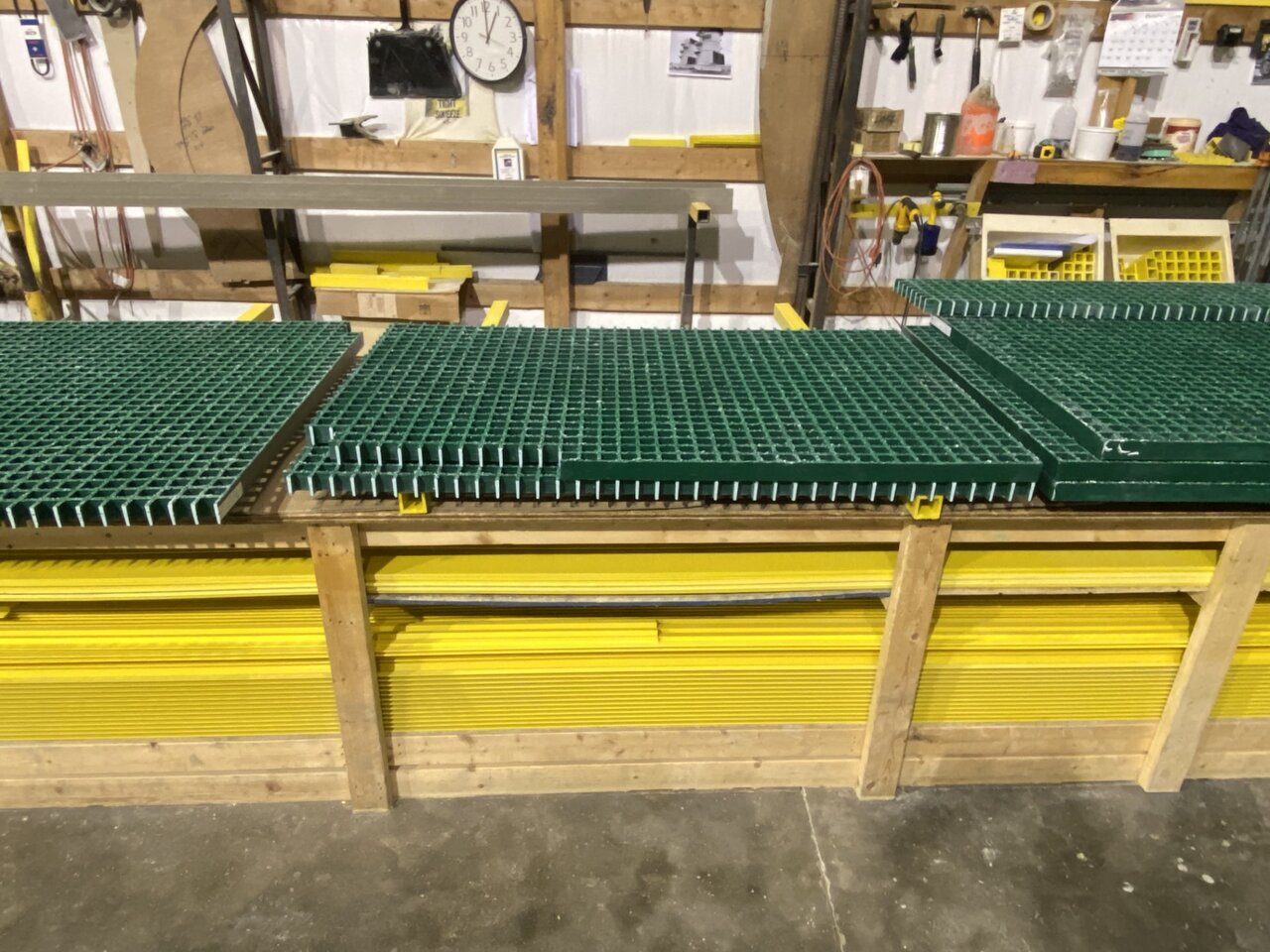
FRP carries a higher up-front price, then almost no recurring cost. It does not rust, so there is no coating cycle and no replacement cycle; it is roughly one-quarter the weight of steel, so installation is faster and safer; and it is non-conductive, removing a category of electrical risk entirely. Over the asset life, the lines cross — and on corrosive or energized sites they cross early.
A simplified 25-year comparison
| Cost driver (illustrative) | Galvanized steel | Crimar FRP |
|---|---|---|
| Initial material | Lower | Higher |
| Re-coating / galvanizing | Every ~5–7 yrs | None |
| Replacements over 25 yrs | 2–3× | 0 — installs once |
| Outage / crane / labor to replace | Repeated | One-time install |
| Conductivity risk | Conductive | Non-conductive |
| 25-year total cost | Higher | Lower |
And the decisive line item never shows up in the table: one avoided corrosion failure, shock incident, or unplanned outage can outweigh the entire FRP premium.
When FRP wins on TCO
FRP makes the strongest TCO case wherever the environment punishes steel: water and wastewater treatment, substations and energized areas, chemical and coastal exposure, cooling towers, and remote or high-uptime sites where a shutdown is costly. In dry, benign, indoor settings with no electrical concern, steel can still be the economical choice — the point is to compare on lifetime cost, not sticker price.
Crimar supplies the corrosion-proof building blocks for these environments: FRP grating, structural profiles, handrail and access, and GFRP rebar. See our water and electrical & utility applications for where it pays off.
Get a TCO-based quote
Tell us your environment, span/loads, and replacement history and we will help you compare lifetime cost — not just unit price — and provide a quote.