The race to build AI is, underneath the silicon, a race to build heavy industrial infrastructure. Every new data center campus needs substations and switchgear, megawatts of power distribution, vast cooling and water-treatment systems, and a materials supply chain pulled from mines and processing plants. Almost all of it lives outdoors, around energized equipment, or in chemically aggressive water — exactly the conditions in which steel and aluminum fail.
The AI boom is an industrial-infrastructure boom
A modern AI data center is not just servers. To stand one up you build: high-voltage substations and switchyards; miles of cable management and conduit; cooling loops, cooling towers, and makeup-water systems; on-site water and wastewater treatment; and backup power and fuel systems. Behind that, the chips, copper, and batteries come from mining and mineral processing that is scaling just as fast. Each of these is a corrosive or electrically sensitive environment.
The hidden problem: steel corrodes and conducts where this infrastructure lives
Outdoor substations, coastal and inland water plants, chemical dosing rooms, cooling towers, and mineral-processing circuits all attack carbon and galvanized steel. Once the coating is breached, the rust-and-replacement cycle begins. And around energized equipment, conductive metal platforms, ladders, railing, and conduit are a shock and arc-flash hazard. For infrastructure meant to run for decades at high uptime, that is both a safety liability and a recurring maintenance cost.
Where FRP fits in AI infrastructure
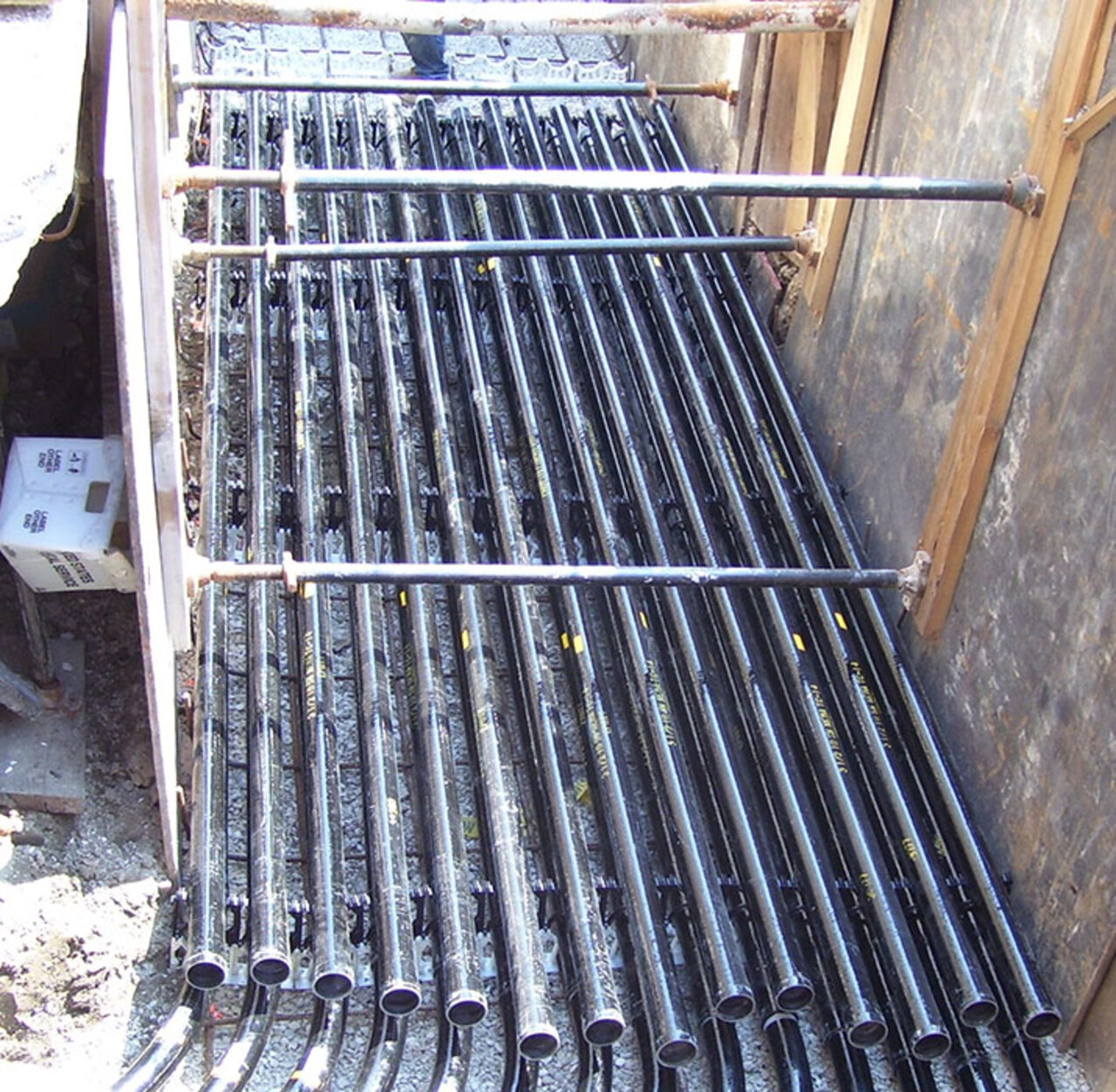
Power & electrical — substations, switchyards, cable management
Fiberglass is non-conductive and RF-transparent, so it is specified around energized gear where metal is a hazard. For the electrical side of an AI campus that means: FRP grating for equipment platforms and trench covers, non-conductive handrail and access, FRP conduit and cable protection, and structural profiles for cable-tray and equipment supports. See our electrical & utility applications.
Cooling & water treatment
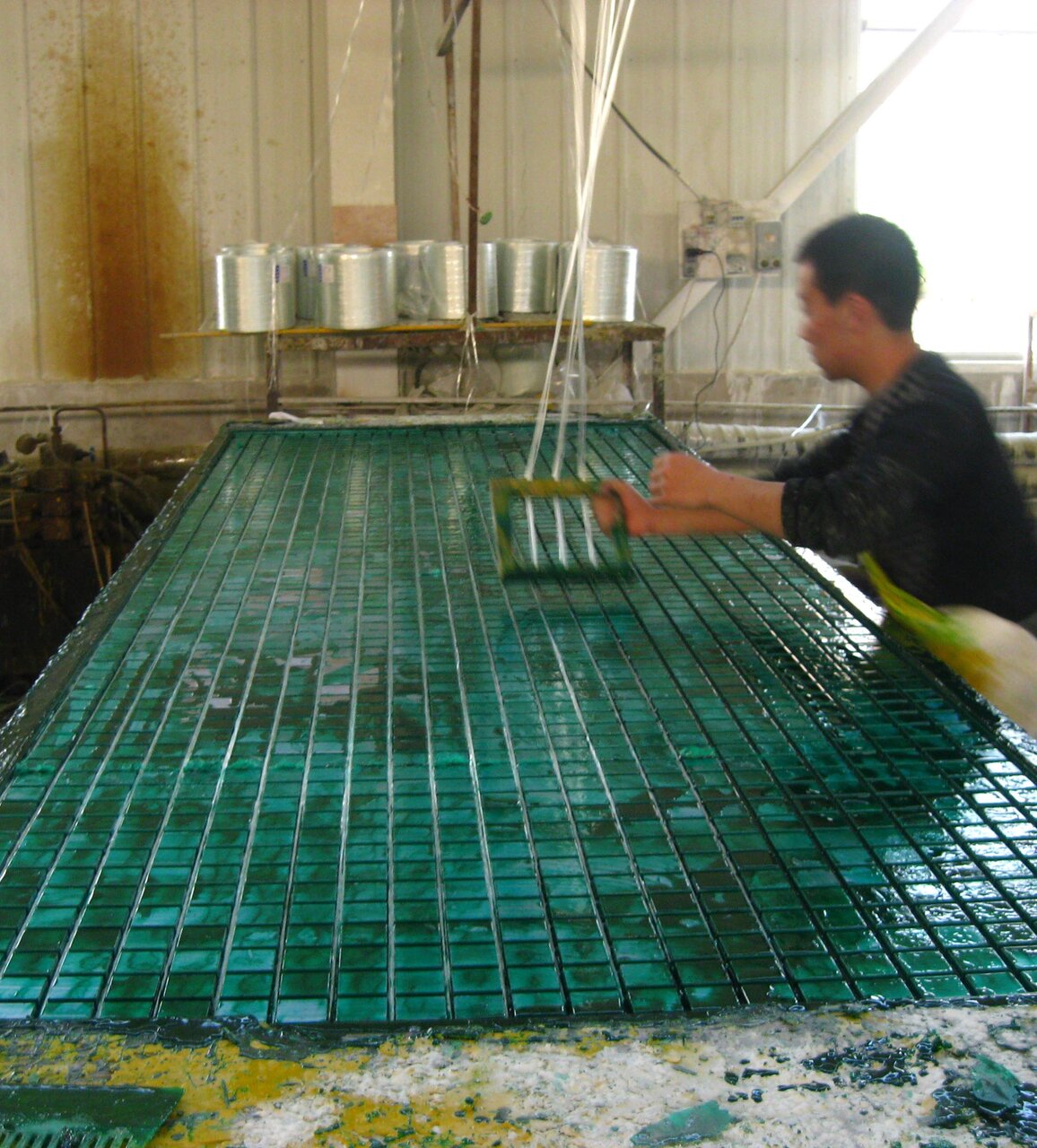
AI compute is, thermodynamically, a heat problem — and increasingly a water problem. Cooling loops, cooling towers, makeup-water lines, and on-site water/wastewater treatment are full of chlorides, biocides, and treatment chemistry that corrode steel. FRP answers with corrosion-proof piping and duct, tanks, grating for platforms and trench covers, and GFRP rebar that never rusts in concrete basins and structures. See our water & wastewater applications.
The materials supply chain — mining & processing
The buildout also pulls hard on copper, aluminum, lithium, and other minerals. Their mining and processing — leaching, smelting, electrowinning, tailings handling — are among the most corrosive industrial environments there are. The same FRP grating, structural profiles, handrail, and stakes that protect a water plant protect a processing circuit. See our chemical, oil & gas applications.
Why FRP — lower lifetime cost, not just lower risk
- Non-conductive & RF-transparent — reduces shock and arc-flash exposure near energized equipment.
- Corrosion-proof — immune to chlorides, acids, alkalis, and H2S; no rust, no spalling.
- ~1/4 the weight of steel — faster, safer installs and shorter outages.
- Virtually maintenance-free — no painting, no re-galvanizing, no replacement cycle.
The sticker price of FRP is higher than steel; the lifetime cost is lower — and on a 24/7 facility, one avoided corrosion failure or one avoided unplanned outage can outweigh the entire material premium.
Built in the USA for a domestic build-out
The AI infrastructure boom is also a reshoring story — operators want resilient, domestic supply. Crimar Composites manufactures pultruded FRP in Los Angeles, USA, backed by US-based engineering and customer support, so you can specify, source, and service corrosion-resistant systems close to the project.
Talk to Crimar
Designing the power, cooling, or water systems behind an AI or data-center build? Send us your environment, loads, and components and our team will help you specify non-conductive, corrosion-proof FRP and provide a quote.