Industry insights on corrosion-resistant FRP for power, water, infrastructure, and processing — including where fiberglass beats steel and aluminum, and how to lower the lifetime cost of harsh-environment assets.
- Engineering FRP Off-Gas Ductwork for Corrosive, High-Temperature Service
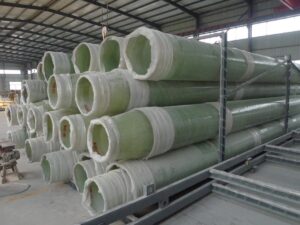 Corrosive, high-temperature off-gas duct is one of FRP’s toughest jobs. How Crimar engineers vinyl-ester and carbon-reinforced ductwork for decades of service.
 - Molded vs. Pultruded FRP Grating: How to Choose
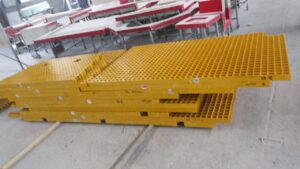 Molded and pultruded FRP grating solve different problems. A quick guide to choosing the right type by load, span, corrosion, and open area.
 - FRP for Water and Wastewater Treatment Plants
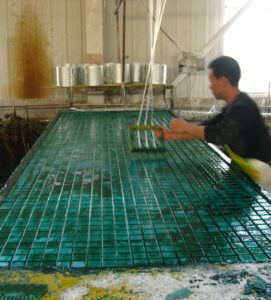 Water and wastewater plants are wet, chemical, and corrosive — the conditions that destroy steel. Where fiberglass (FRP) belongs in treatment infrastructure.
 - FRP in Mining and Mineral Processing: Surviving the Harshest Environments
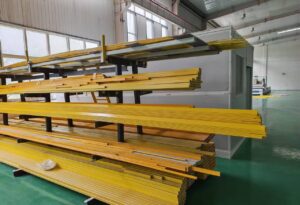 Leaching, smelting, and tailings handling are among the most corrosive industrial environments. Why mines and processors specify corrosion-proof FRP.
 - Why Substations and Utility Sites Need Non-Conductive FRP
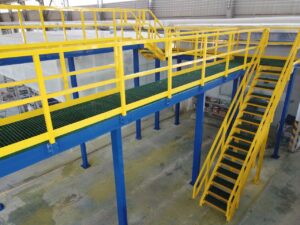 Around energized equipment, conductive steel is a hazard and corrosion destroys it outdoors. Why utilities specify non-conductive, corrosion-proof FRP.
 - Steel vs. FRP: The 25-Year Total Cost of Ownership
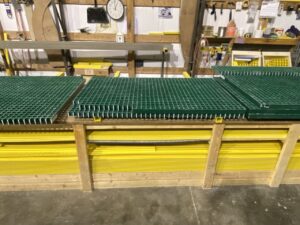 FRP costs more up front than steel but less over its life. A look at the 25-year total cost of ownership: coatings, replacement, downtime, and safety.
 - AI Infrastructure Needs Corrosion-Resistant Industrial Systems
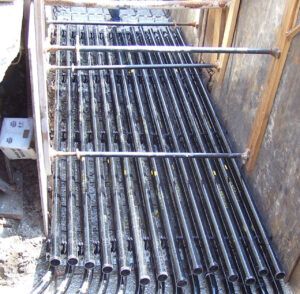 The AI build-out runs on power, water, and materials — much of it in corrosive, energized environments where steel fails. Why FRP belongs in AI infrastructure.