Few environments are harder on materials than a water or wastewater treatment plant. Constant moisture, chlorides, treatment chemistry, and hydrogen sulfide (H2S) corrode steel and aluminum quickly — which is why treatment facilities are one of the largest users of corrosion-proof fiberglass (FRP).
Why steel struggles in treatment plants
Galvanized steel grating, railing, and supports rust where they sit over channels, clarifiers, and basins. H2S in headworks and digesters is especially aggressive, and the cost of taking equipment offline to swap corroded structures is high. FRP is immune to chlorides, acids, alkalis, and H2S, so it serves for decades with no painting or replacement cycle.
Where FRP is used across the plant
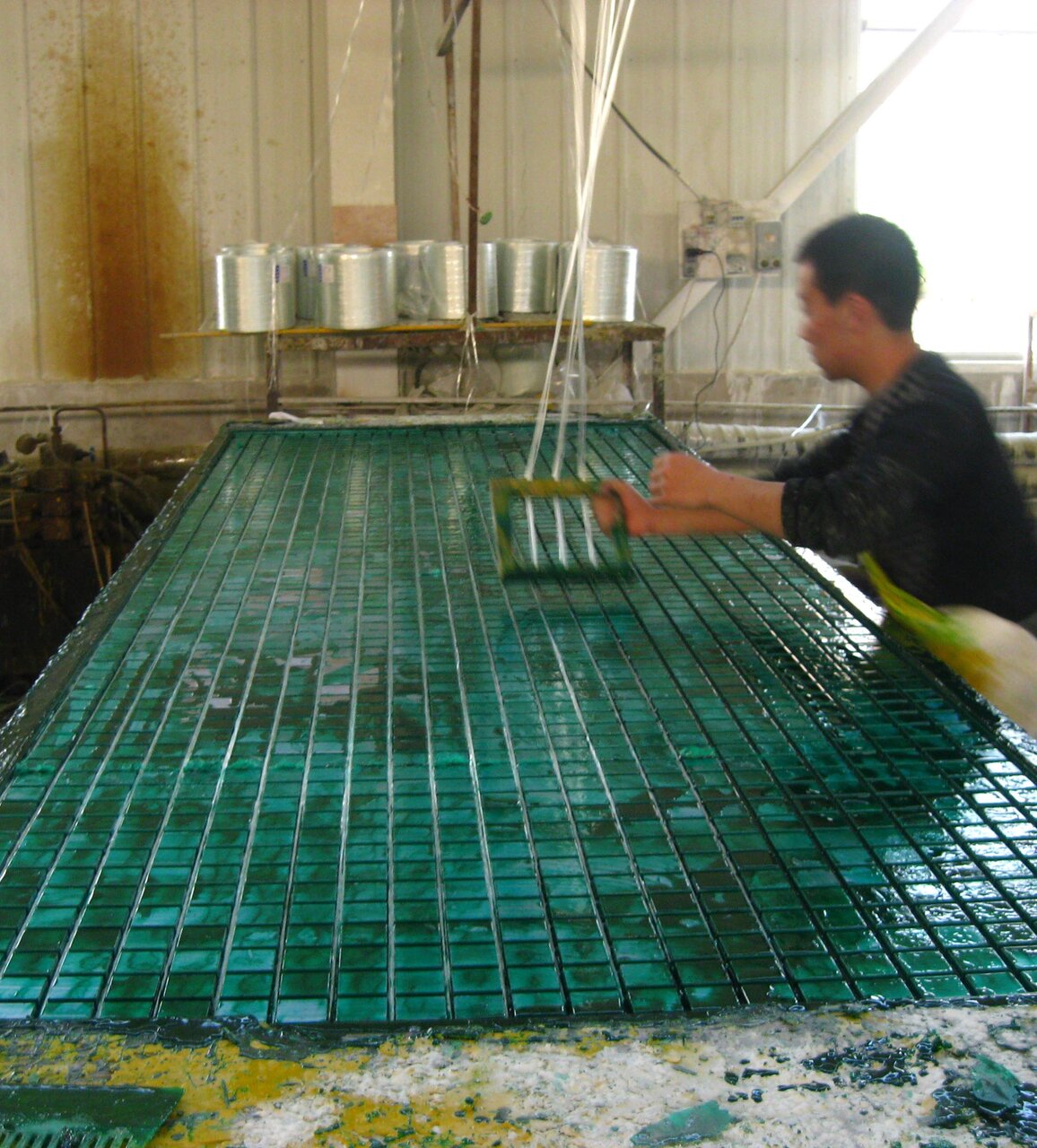
- FRP grating — walkways and platforms over channels, clarifiers, and basins; trench and channel covers
- Handrail, guardrail, ladders, and stairs — non-slip, corrosion-proof access
- FRP piping and duct — process and chemical lines
- GFRP rebar — reinforcement for concrete tanks and basins that never rusts or spalls
- Structural profiles — equipment supports and framing
Safety and slip resistance
Wet walking surfaces are a slip hazard. FRP grating comes with a gritted or concave anti-slip surface, and FRP railing is engineered to OSHA walking-working-surface requirements — important for plants with frequent operator access.
The lifetime-cost argument
FRP costs more up front than steel, but in a treatment plant the lifetime cost is typically lower: no recoating, no replacement cycle, and no outages to swap corroded structures. See our water & wastewater applications and our note on steel vs. FRP total cost of ownership.
Specifying FRP for your plant
Tell us the location (headworks, clarifier, digester, etc.), spans and loads, and chemical exposure, and our team will help you select the right resin and components and provide a quote.